
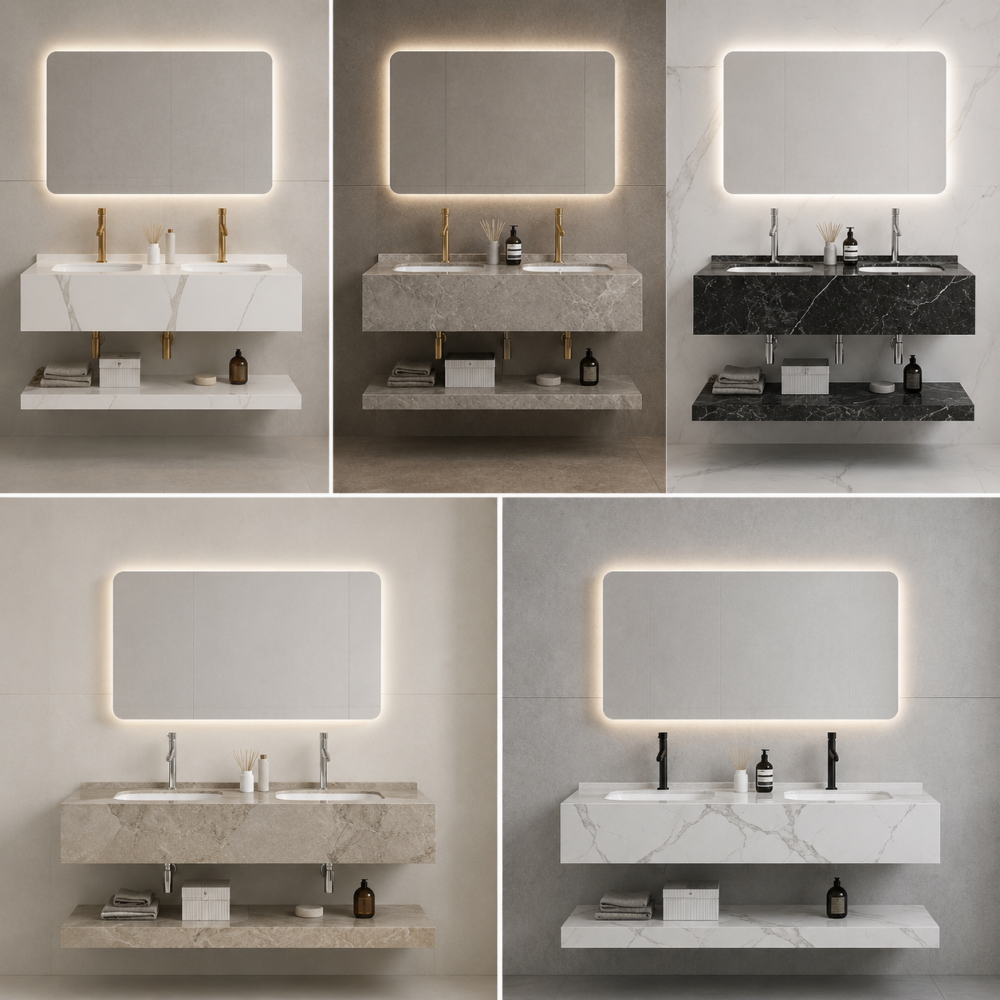
Marble bathroom sinks are a popular choice for modern bathrooms because they combine distinctive appearance with a wide range of designs, colors, and installation styles. They can be used in homes, villas, hotels, offices, restaurants, and commercial projects.
When choosing a marble sink, however, appearance should not be the only consideration. The type of material, bathroom dimensions, plumbing layout, mixer compatibility, storage requirements, and maintenance all affect whether the sink will work well after installation.
If you are comparing different styles, browse Wasten's bathroom sink collection before choosing the final size and installation type.
What Is a Marble Bathroom Sink?
The term marble bathroom sink can refer to several different products.
Some sinks are made from natural marble, while others use engineered or artificial marble. In some vanity designs, the basin may be porcelain while the countertop or surrounding surface has a marble finish.
For this reason, always check the product specifications rather than relying only on the product image or title.
Natural Marble vs Engineered Marble
Natural Marble
Natural marble is stone extracted from quarries and shaped for use in bathroom surfaces, countertops, and custom sink applications.
Its main characteristics include:
- Natural variation in veining and color
- Distinctive appearance
- Different stone finishes
- Specific cleaning and maintenance requirements
Because natural stone can react differently to cleaning products, care instructions should always be followed.
Engineered or Artificial Marble
Engineered marble is manufactured using mineral materials and binding components, depending on the production method.
It may offer:
- More consistent color and pattern
- Flexible shapes and designs
- Integrated basin options
- Different price points
- Easier daily maintenance in some products
Neither material is automatically better for every bathroom. The right option depends on budget, appearance, intended use, and maintenance expectations.
Popular Marble Sink Designs
Wall-Mounted Marble Sinks
Wall-mounted designs are fixed to the wall and leave more visible floor space.
They can work well in:
- Small bathrooms
- Guest bathrooms
- Modern interiors
- Minimalist spaces
You can compare them with Wasten's wall-mounted bathroom sinks.
Marble Vanities With Cabinets
Vanity units combine the basin with storage space for items such as:
- Towels
- Toiletries
- Cleaning products
- Bathroom accessories
Before purchasing, confirm that the drain and water connections will not interfere with drawers or internal cabinet space.
Double Bathroom Vanities
Double sinks can be practical in larger bathrooms, especially master bathrooms or shared spaces.
They usually require:
- More wall width
- Suitable plumbing
- Larger countertop or cabinet space
- Adequate movement area
Marble Vanities With LED Mirrors
Some vanity sets include LED mirrors.
Before installation, check:
- Mirror dimensions
- Electrical connection requirements
- Wall position
- Installation height
- Distance from wet areas
Electrical work in bathrooms should be completed according to applicable safety requirements.
How to Choose the Right Size
Do not choose a sink based only on how it looks in a product photo.
Measure:
- Available wall width
- Maximum depth
- Door clearance
- Distance from the toilet
- Distance from the shower
- Water connection points
- Drain location
In smaller bathrooms, a shallower or wall-mounted vanity may provide better movement space than a large floor-standing cabinet.
The most suitable sink is not necessarily the largest one; it is the one that fits the room comfortably and works with the existing plumbing.
Choosing the Right Bathroom Mixer
The mixer should be selected according to the basin dimensions.
Check:
- Mixer height
- Spout reach
- Basin depth
- Installation hole
- Water pressure
- Mounting type
A mixer that is too high for a shallow basin may increase water splashing.
For more detail, see our bathroom mixer selection guide.
Plumbing and Installation
Even a correctly sized vanity can create installation problems if it does not match the existing plumbing.
Before installation, verify:
- Hot and cold water points
- Drain position
- Trap dimensions
- Shut-off valves
- Space inside the cabinet
- Access for future maintenance
For installation-related products, browse Wasten's plumbing tools and supplies.
It is also important to test the connections after installation and confirm that there are no leaks.
Cleaning and Maintenance
Cleaning requirements depend on the material.
For natural marble:
- Use products suitable for natural stone
- Avoid acidic cleaners
- Avoid abrasive tools
- Remove spills promptly
- Dry standing water when needed
For engineered marble, maintenance may be simpler, but instructions still vary between products.
Regular cleaning around the mixer, drain, and cabinet edges can also help identify leaks or buildup early.
Common Problems
Water Marks
Mineral deposits may become visible, especially on darker surfaces.
Regular cleaning and drying can help reduce buildup.
Scratches
Sharp objects or abrasive cleaning materials may damage some finishes.
Use soft cleaning tools and appropriate products.
Loss of Shine
Strong or unsuitable cleaning chemicals can affect polished surfaces.
Use material-compatible cleaners.
Cabinet Moisture Damage
If the sink includes a cabinet, repeated exposure to standing water may affect some cabinet materials.
Leaks should be repaired promptly.
Marble vs Porcelain Bathroom Sinks
Both marble and porcelain are used in bathroom sinks, but they provide different characteristics.
Marble and marble-effect vanities are often selected for:
- Decorative appearance
- Coordinated vanity designs
- Integrated surfaces
- Wider cabinet options
Porcelain sinks are commonly selected for:
- Smooth glazed surfaces
- Familiar bathroom applications
- Easy cleaning
- Wide availability
- Multiple installation styles
The right choice depends on design, maintenance, budget, and installation requirements.
If you are planning the full bathroom rather than only the sink, read our Sanitary Ware in Saudi Arabia Guide.
What to Check Before Buying
Before ordering a marble bathroom sink, confirm:
- Actual material
- Width, depth, and height
- Basin type
- Cabinet material
- Mixer compatibility
- Drain position
- Included accessories
- Whether a mirror is included
- Installation requirements
- Cleaning instructions
- Warranty information, where applicable
Do not assume that every item shown in the product image is included in the package.
Marble Bathroom Sinks for Homes and Projects
For homes and villas, design, storage, and coordination with the rest of the bathroom may be the main priorities.
For hotels, offices, and commercial projects, additional factors should be considered:
- Cleaning frequency
- Maintenance access
- Standardized dimensions
- Product availability
- Replacement options
- Expected usage level
The best choice is the sink that matches the space, plumbing system, daily use, and maintenance requirements.
Browse Wasten's bathroom sinks and plumbing supplies when preparing your bathroom or project.
Frequently Asked Questions
Is natural marble better than engineered marble?
Not always. Natural marble offers unique veining, while engineered marble may provide more consistent designs and different maintenance characteristics.
Are marble sinks suitable for small bathrooms?
Yes, provided the width and depth match the available space. Wall-mounted or shallower units may be more practical in compact bathrooms.
How do I choose the correct mixer height?
Compare the mixer height and spout reach with the basin depth and height to reduce excessive splashing.
Can I use any bathroom cleaner on natural marble?
No. Some acidic or strong cleaning products may damage natural stone, so use products suitable for the specific material.