
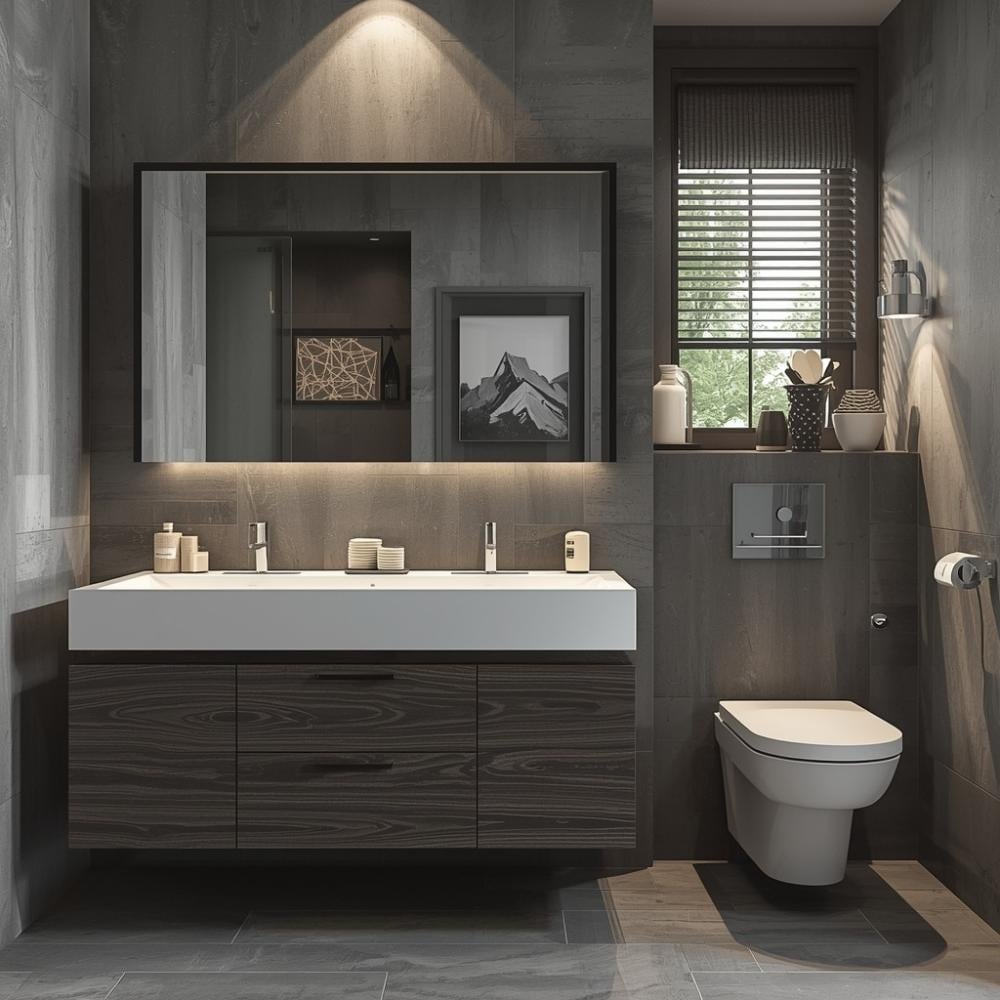
Correct bathroom sink installation starts long before the sink is fixed to the wall or vanity. The sink dimensions, water connections, drainage position, mixer type, wall strength, and available bathroom space should all be checked before installation begins.
Poor planning can lead to problems such as water leaks, uncomfortable sink height, incorrect mixer positioning, blocked drawers, or drainage connections that do not align with the selected basin.
If you are still choosing the sink itself, compare Wasten's bathroom sink collection before finalizing the plumbing points.
What Should Be Checked Before Installing a Bathroom Sink?
Before installation, confirm the main measurements and connections.
Check:
- Sink width and depth
- Installation height
- Hot and cold water points
- Drain location
- Mixer mounting position
- Available wall strength
- Distance from the toilet or shower
- Door clearance
- Space required for a vanity cabinet
The exact requirements depend on whether the sink is wall-mounted, countertop, floor-standing, or integrated into a vanity.
Choose the Sink Before Final Plumbing Work
Whenever possible, select the main sink or confirm its technical dimensions before completing the plumbing network.
Different sinks can require different:
- Drain heights
- Water connection positions
- Mixer locations
- Mounting points
- Cabinet clearances
Changing these points after tiles and finishes are complete may require unnecessary modifications.
For broader plumbing planning, see our modern plumbing guide.
Wall-Mounted Bathroom Sinks
Wall-mounted sinks are fixed directly to the wall and leave the floor area underneath visible.
Before installation, check:
- Wall construction
- Required brackets or fixings
- Sink weight
- Recommended installation height
- Drain alignment
- Water connections
The wall and fixing method must be suitable for the specific sink.
Browse wall-mounted bathroom sinks to compare different styles and dimensions.
Vanity and Cabinet Sinks
A vanity combines the sink with storage space.
This makes plumbing alignment particularly important because pipes and traps can interfere with drawers or cabinet shelves.
Before purchasing, confirm:
- Cabinet width and depth
- Drain location
- Internal drawer layout
- Water valve positions
- Mixer connections
The objective is to maintain usable storage without restricting access to plumbing components.
Choosing the Right Mixer
The mixer should match the basin size and installation type.
Review:
- Mixer height
- Spout reach
- Basin depth
- Mounting hole
- Water pressure
- Hot and cold connections
A mixer that is too high for a shallow basin may increase splashing, while a short spout may not reach comfortably into a larger sink.
Plumbing Connections
A typical bathroom sink installation may involve:
- Hot-water supply
- Cold-water supply
- Shut-off valves
- Flexible connections
- Waste outlet
- Trap
- Drainage pipe
For valves, fittings, and related components, browse Wasten's plumbing tools and supplies.
Connections should remain accessible where possible so that maintenance does not require unnecessary removal of cabinets or finishes.
Drainage and Trap Position
The sink drain should align correctly with the waste system.
Poor alignment can result in:
- Difficult installation
- Unnecessary bends
- Reduced cabinet space
- Leakage around connections
- Difficult maintenance
The trap should also remain accessible for inspection and cleaning.
Correct Sink Height
There is no single installation height that suits every user or every basin.
The final height depends on:
- Basin design
- Vanity height
- User requirements
- Countertop thickness
- Installation instructions
For countertop basins, remember that the basin itself adds additional height above the vanity surface.
Common Installation Problems
Water Leakage
Leaks may occur around:
- Mixer connections
- Flexible hoses
- Shut-off valves
- Trap joints
- Drain fittings
After installation, all connections should be tested before the area is considered complete.
Slow Drainage
Slow drainage may result from:
- Incorrect pipe arrangement
- Blockage
- Trap issues
- Existing drainage problems
The cause should be identified rather than automatically replacing the sink.
Sink Movement
A wall-mounted sink or vanity should not move during normal use.
Movement can indicate:
- Incorrect fixing
- Unsuitable wall anchors
- Loose hardware
- Poor installation
The fixing method should match the wall type and product requirements.
Excessive Water Splashing
Splashing can be caused by a mismatch between:
- Mixer height
- Spout position
- Basin depth
- Water flow
This is why the mixer and sink should ideally be selected together.
Installing Marble and Porcelain Sinks
Different sink materials can require different handling and fixing methods.
Porcelain Sinks
Porcelain sinks have a glazed surface and are widely used in bathrooms.
During installation, avoid excessive pressure on the basin and follow the fixing method specified for the product.
Marble and Marble-Effect Sinks
Marble or marble-effect vanities may be heavier and can include cabinets, countertops, or integrated basins.
Check the total product weight and support requirements before installation.
For more information about these designs, read our marble bathroom sinks guide.
What Should Be Tested After Installation?
Before finishing the job, check:
- Hot and cold water flow
- Mixer operation
- Drainage speed
- Leaks around fittings
- Trap connections
- Sink stability
- Water around cabinet edges
Allowing the water to run for a short period can help reveal leaks that may not be immediately visible.
Maintaining the Sink After Installation
Regular maintenance can reduce future problems.
Useful habits include:
- Cleaning the basin regularly
- Avoiding unsuitable abrasive cleaners
- Checking for leaks
- Keeping the drain clear
- Inspecting flexible hoses periodically
- Repairing small leaks promptly
Cleaning instructions should match the material and finish of the sink.
Planning a Complete Bathroom
Sink installation should be coordinated with the rest of the bathroom rather than handled as a separate decision.
Consider the relationship between:
- Washbasin
- Mixer
- Toilet
- Shower
- Water heater
- Drainage
- Bathroom accessories
For a wider overview of these products, read our Sanitary Ware in Saudi Arabia Guide.
Choosing Bathroom Sinks and Plumbing Supplies in Saudi Arabia
When preparing a bathroom project, first confirm the required measurements and plumbing configuration, then compare products that match those requirements.
Wasten provides bathroom sinks, sanitary ware, and plumbing products for homes and projects across Saudi Arabia.
You can compare bathroom sinks and plumbing supplies according to the dimensions and requirements of your bathroom.
Frequently Asked Questions
Should I buy the sink before finishing the plumbing?
Ideally, select the sink or confirm its technical dimensions before final water and drainage points are completed.
Why does a bathroom sink leak after installation?
Possible causes include loose connections, damaged seals, incorrect fittings, or problems around the mixer or trap.
Can any sink be mounted on any wall?
No. Wall type, sink weight, mounting method, and manufacturer requirements should all be considered.
Why does water splash outside the basin?
Mixer height, spout reach, water flow, and basin depth may not be correctly matched.
Who should install a bathroom sink?
Where professional installation is required, use a qualified plumbing professional who can verify the water, drainage, mounting, and leakage requirements.