
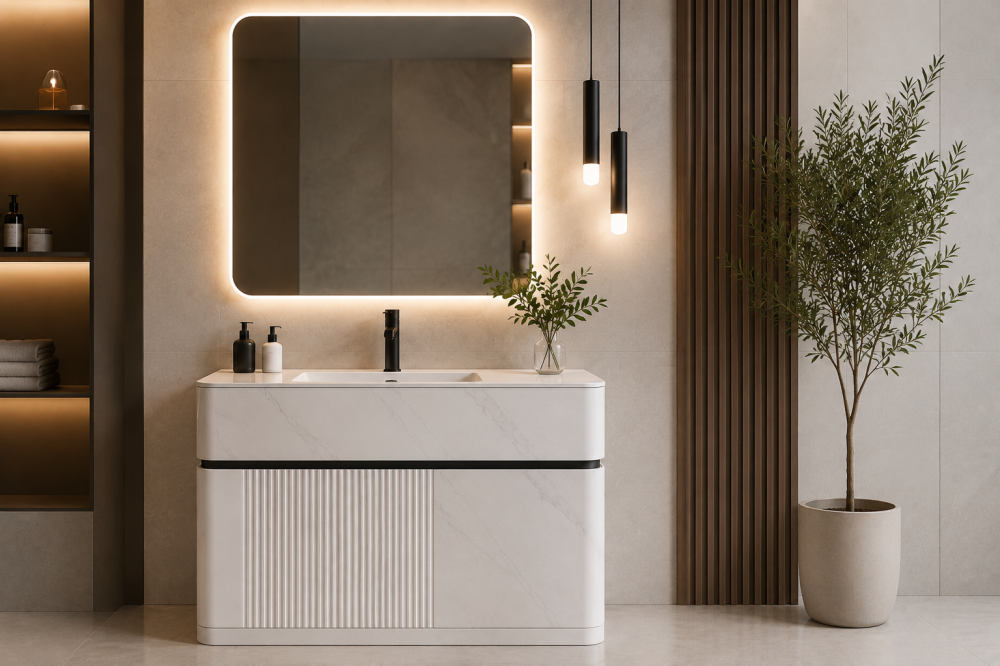
Floor-Standing Porcelain Bathroom Vanities: Complete Buying Guide
A floor-standing porcelain bathroom vanity can combine a washbasin, storage space, and a finished bathroom feature in one practical unit. These vanities are commonly used in homes, apartments, hotels, and renovation projects where both functionality and appearance matter.
Before choosing a vanity, however, it is important to consider more than its color or design. Dimensions, plumbing locations, storage requirements, basin material, installation space, and daily usage all affect whether a vanity will work properly in your bathroom.
If you are planning a complete bathroom renovation, you can also read our Sanitary Ware in Saudi Arabia guide for a broader overview of bathroom fixtures and plumbing products.
What Is a Floor-Standing Bathroom Vanity?
A floor-standing bathroom vanity is a washbasin unit supported directly by the bathroom floor rather than being fully suspended from the wall.
Depending on the design, it may include:
- A porcelain or ceramic washbasin
- Storage drawers or cabinets
- Countertop space
- Plumbing access
- Mirror or LED mirror
- Mixer installation point
Because the unit is supported by the floor, it can provide useful storage while creating a structured look in the bathroom.
You can browse Wasten's bathroom sinks and wall-mounted basin collection to compare different washbasin styles before deciding which installation type suits your space.
Why Choose a Porcelain Bathroom Vanity?
Porcelain is widely used for bathroom washbasins because its glazed surface is relatively easy to clean and suitable for regular exposure to water.
A porcelain vanity basin can work well in residential bathrooms because it offers a smooth surface and is available in many shapes and finishes.
However, the quality of the complete vanity depends on more than the basin itself. The cabinet material, fittings, drawer hardware, plumbing access, and installation quality should also be considered.
Floor-Standing vs Wall-Mounted Bathroom Vanities
Both designs can work well, but they suit different needs.
Floor-Standing Vanities
Floor-standing units are supported by the floor and may provide more internal cabinet space.
They can be useful when:
- Additional bathroom storage is required
- A larger vanity is preferred
- The wall is not suitable for supporting a suspended unit
- A traditional or substantial design is desired
Wall-Mounted Vanities
Wall-mounted units are fixed above the floor.
They can help create more visible floor space and make cleaning underneath the unit easier.
For compact bathrooms, you may want to compare different wall-mounted bathroom sinks before deciding between a suspended and floor-standing design.
How to Choose the Right Vanity Size
The correct vanity size depends on the available bathroom space.
Before ordering, measure:
- Total available wall width
- Vanity depth
- Distance from doors
- Distance from the toilet or shower
- Plumbing positions
- Walking space around the vanity
A vanity that looks suitable online may feel too large once installed in a smaller bathroom.
It is therefore better to measure the actual installation area before selecting the product.
Consider Bathroom Layout and Plumbing
Plumbing compatibility is one of the most important factors when selecting a bathroom vanity.
Check the positions of:
- Hot water connection
- Cold water connection
- Drainage outlet
- Mixer connection
- Floor or wall drainage
If the vanity cabinet does not align with the existing plumbing, additional modifications may be required.
For valves, fittings and other installation components, explore Wasten's plumbing tools and supplies.
Choosing the Right Porcelain Basin
Not all bathroom basins have the same shape or installation style.
Common options include:
Integrated Basin
The basin and vanity top form a coordinated unit.
This design can provide a clean appearance and simplify the area around the washbasin.
Countertop Basin
A separate basin is installed above the vanity surface.
This style can create a distinctive look but requires careful selection of mixer height and countertop dimensions.
Recessed or Built-In Basin
The basin is partially or fully integrated into the countertop.
This may provide more usable surface space around the basin depending on the design.
Storage Requirements
Storage is one of the main practical benefits of a bathroom vanity.
Before choosing a unit, consider what you actually need to store.
Typical bathroom items may include:
- Towels
- Cleaning products
- Toiletries
- Personal care products
- Spare bathroom supplies
Drawers can provide easier access to smaller items, while larger cabinet compartments may be useful for bulkier products.
Avoid selecting a vanity only because it has many drawers. Make sure the internal layout does not interfere with plumbing pipes.
Bathroom Vanity Materials
The washbasin may be porcelain, but the vanity cabinet can be manufactured from different materials.
When comparing products, consider how the cabinet performs in a humid bathroom environment.
Important factors include:
- Moisture resistance
- Edge sealing
- Surface finish
- Hardware quality
- Ease of cleaning
- Ventilation around the cabinet
Water should not be allowed to remain around cabinet edges or joints for long periods.
Choosing a Bathroom Mixer
The mixer should match both the basin and the installation configuration.
Consider:
- Mixer height
- Spout reach
- Basin depth
- Installation hole
- Water pressure
- Hot and cold connections
For countertop basins, a taller mixer may be required depending on the basin design.
For integrated basins, standard-height mixers may be more suitable.
Always check the product dimensions before purchasing the mixer.
Vanities With LED Mirrors
Many modern bathroom vanity sets are available with LED mirrors.
An LED mirror can provide additional lighting around the washbasin area and may include features such as touch controls depending on the model.
Before installation, check:
- Electrical connection requirements
- Mirror dimensions
- Wall position
- Distance from water sources
- Installation instructions
Electrical installation in bathrooms should be completed according to applicable safety requirements.
Color and Bathroom Design
Floor-standing porcelain vanities are available in different colors and finishes.
Common combinations may include:
- White
- Black
- Grey
- Marble-effect finishes
- Beige tones
- Wood-effect cabinets
Choose a finish that works with the bathroom tiles, walls, mixer finish, mirror, and other sanitary fixtures.
A coordinated bathroom does not require every component to have exactly the same color. Balanced finishes can often create a cleaner overall result.
Cleaning and Maintenance
Routine maintenance can help keep a porcelain washbasin and vanity in good condition.
For the porcelain surface:
- Remove soap residue regularly
- Avoid unnecessarily abrasive cleaning tools
- Clean around the drain and mixer
- Wipe standing water where possible
For the cabinet:
- Dry water spills
- Avoid prolonged moisture around joints
- Check hinges and drawer fittings periodically
- Maintain ventilation in the bathroom
Always follow the cleaning instructions provided for the specific product and finish.
Common Bathroom Vanity Problems
Incorrect Size
A vanity may block doors, reduce walking space, or interfere with other bathroom fixtures if dimensions are not checked before purchase.
Plumbing Misalignment
Drainage and water connections may not align with the vanity cabinet.
Measure these points before ordering.
Water Around the Cabinet
Repeated water exposure can affect some cabinet materials.
Leaks and standing water should be addressed promptly.
Incorrect Mixer Height
A mixer that is too short or too tall for the basin may cause uncomfortable use or excessive splashing.
Insufficient Storage
A visually attractive vanity may still be impractical if it does not provide suitable storage for everyday bathroom items.
Checklist Before Buying a Floor-Standing Porcelain Vanity
Before placing an order:
- Measure the bathroom installation area
- Confirm vanity width and depth
- Check hot and cold water connections
- Check drainage position
- Confirm basin material
- Review cabinet material
- Check storage configuration
- Confirm mixer compatibility
- Check whether a mirror is included
- Verify electrical requirements for LED mirrors
- Review installation requirements
These checks can reduce the risk of choosing a vanity that does not fit the bathroom or existing plumbing system.
Floor-Standing Porcelain Vanities for Bathrooms in Saudi Arabia
When choosing a floor-standing porcelain bathroom vanity in Saudi Arabia, focus on the actual requirements of the bathroom rather than design alone.
The most suitable unit should fit the available space, match the plumbing layout, provide practical storage, and work comfortably for everyday use.
Wasten offers bathroom sinks, sanitary ware, and plumbing products for homes and projects across Saudi Arabia. You can explore the available bathroom sink collection and plumbing supplies when planning your bathroom installation.